
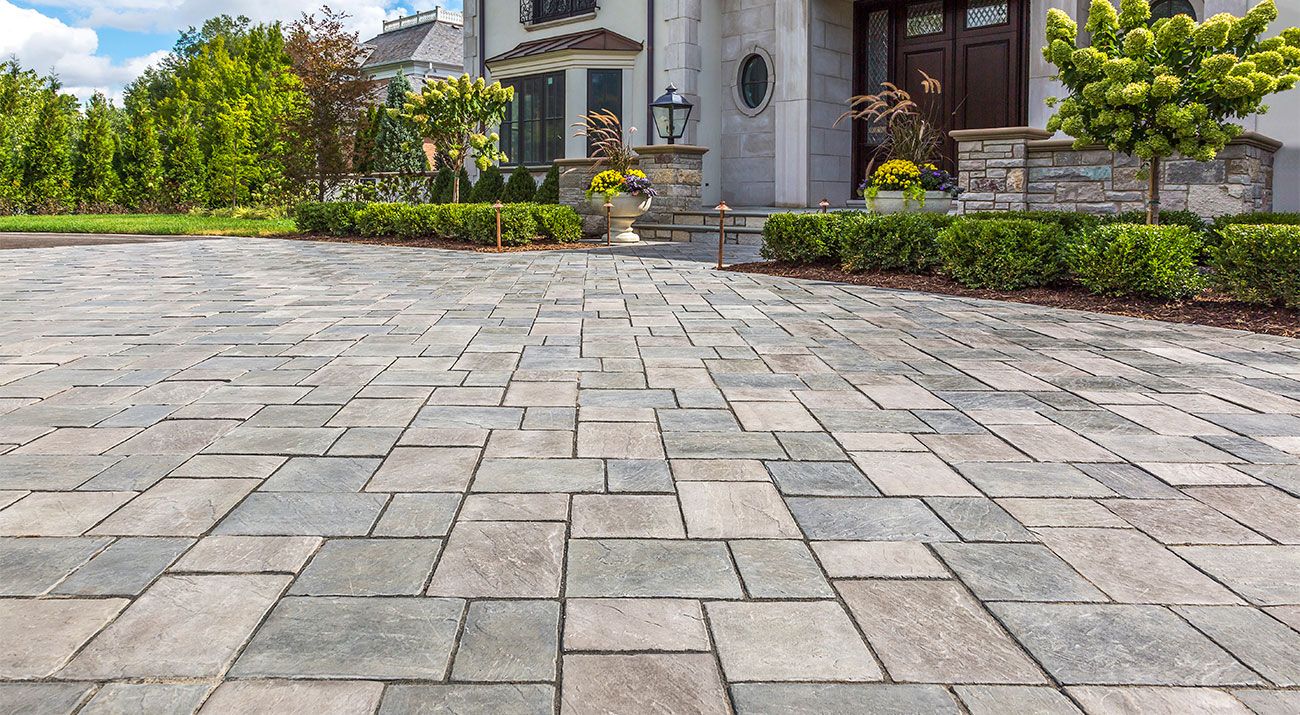
A driveway or walkway takes more daily abuse than almost any other surface on a property, absorbing vehicle weight, foot traffic, freeze-thaw cycles, and constant weather exposure year after year. Yet many homeowners choose a paving material based on appearance alone, without fully understanding how that choice affects durability, maintenance, and long-term cost. Getting this decision right upfront saves significant money and frustration over the life of the surface.
Asphalt, Concrete, and Pavers Compared
Most residential and commercial paving projects come down to a choice between three main materials, each offering a different balance of cost, appearance, and long-term performance.
| Feature | Asphalt | Poured Concrete | Interlocking Pavers |
|---|---|---|---|
| Upfront cost | Lowest | Moderate | Highest |
| Expected lifespan | 15 to 20 years | 25 to 30 years | 30+ years |
| Repair approach | Resurfacing or patching | Full section replacement | Individual paver replacement |
| Freeze-thaw performance | Good, flexible surface | Can crack without proper base | Excellent, joints allow movement |
| Design flexibility | Limited, solid dark surface | Moderate, some color/stamping options | Highest, wide range of patterns and colors |
| Maintenance | Periodic sealcoating | Occasional sealing and crack repair | Occasional joint sand replenishment |
The repair approach row is where the practical differences between these materials become most apparent over time. Asphalt can be resurfaced relatively affordably when it starts showing wear, but poured concrete typically requires replacing an entire cracked or damaged section, since patching concrete rarely blends seamlessly with the surrounding surface. Interlocking pavers offer the most forgiving repair process, since individual damaged pavers can be lifted and replaced without disturbing the rest of the surface, a significant advantage for driveways prone to utility access or settling.
Why Proper Base Preparation Matters More Than the Surface Material
Regardless of which paving material a homeowner chooses, the quality of the base preparation underneath determines how long that surface actually lasts. A paved surface installed over inadequately compacted soil or an insufficient gravel base will develop cracking, sinking, and drainage problems within just a few years, no matter how high-quality the top layer material is.
Proper base preparation involves excavating to an appropriate depth, installing a compacted gravel base that allows for drainage and provides stable support, and ensuring the base itself is graded correctly to direct water away from structures rather than allowing it to pool. This stage of a paving project is largely invisible once complete, which is exactly why it gets overlooked by homeowners focused primarily on the finished appearance, even though it is the single biggest factor in how long that finished surface will actually perform.
Drainage Planning for Staten Island Properties
Drainage deserves particular attention for paving projects in this region, where seasonal freeze-thaw cycles put repeated stress on any surface that traps or holds water. A driveway or walkway that slopes incorrectly, or lacks adequate drainage planning, allows water to pool and then freeze, expanding within cracks and accelerating surface deterioration far faster than proper drainage would allow.
This is particularly important for properties with limited natural slope, where drainage has to be engineered into the paving design rather than relying on existing grade. Working with a contractor experienced in paving for this specific climate and soil condition ensures water management is factored into the project from the initial planning stage, rather than becoming a recurring problem after installation.
Matching the Material to the Project
Not every paving material fits every application equally well. Driveways handling regular vehicle weight benefit from asphalt or properly reinforced concrete, both of which are engineered to handle sustained heavy loads without significant deformation over time. Walkways and patios, which see foot traffic rather than vehicle weight, offer more flexibility, making them well-suited to interlocking pavers where design and aesthetic customization often matter more than raw load-bearing capacity.
Commercial properties add another layer of consideration, since heavier vehicle traffic, delivery trucks, and higher usage frequency typically require thicker asphalt or reinforced concrete specifications compared to a standard residential driveway.
What to Expect During a Professional Paving Project
A properly executed paving project follows a consistent sequence regardless of material choice. Excavation removes the existing surface and any unsuitable soil, followed by grading to establish proper slope for drainage. A compacted gravel base is installed and tested for stability before the final surface material goes down, whether that’s asphalt, poured concrete, or individually placed pavers.
Curing and sealing timelines vary significantly by material. Asphalt typically needs a short curing period before vehicle use, while poured concrete requires a longer cure time before it can handle regular traffic without risking surface damage. Pavers, by contrast, are generally usable almost immediately after installation, since there’s no wet material that needs to cure before the surface can bear weight.
Frequently Asked Questions
How long should a new driveway last before needing significant repair? With proper installation and base preparation, asphalt driveways typically perform well for 15 to 20 years, while concrete and pavers can last 25 years or more with routine maintenance.
Is resealing necessary for all paving materials? Asphalt benefits most from periodic sealcoating, typically every few years, while concrete and pavers require less frequent sealing, though both still benefit from occasional maintenance to protect against staining and moisture penetration.
Can a cracked concrete driveway be repaired instead of replaced? Minor cracks can often be filled and sealed, but significant or widespread cracking usually indicates a base or structural issue that repair alone won’t resolve, making replacement the more durable long-term solution.
Do pavers require more maintenance than asphalt or concrete? Pavers require periodic joint sand replenishment and occasional resetting if individual units shift, but they avoid the large-scale resurfacing or replacement that asphalt and concrete eventually need.
Building a Surface That Performs for Decades
The right paving choice depends on balancing upfront budget against long-term performance expectations, but regardless of which material a homeowner selects, proper base preparation and drainage planning are what actually determine whether that investment holds up. Skipping these foundational steps to save on upfront cost consistently leads to premature cracking, sinking, and drainage problems that end up costing more to fix than they would have cost to prevent.
For homeowners and businesses across Staten Island and the surrounding boroughs planning a driveway, walkway, or commercial paving project, getting the foundation right from the start makes all the difference in how the finished surface performs for years to come. R & L General Contractor Masonry INC brings the site preparation expertise and material knowledge needed to deliver a paved surface built to last, not just one that looks good on installation day.